

Deep Dive: Music Education as Transformation
By Yu-Chen Lin, DMA candidate, instructor, and contributing writer
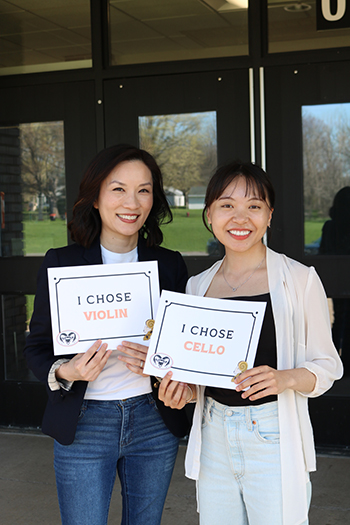
Instructor and Coordinator of String Music Education Jean Lee (left) sat down for an intimate conversation with MSU DMA candidate in cello and the author of this piece, Yu-Chen Lin.
It was a windy, stormy day, yet the room was full of warmth and light. I sat down with Jean Lee, an instructor and coordinator of string music education in the College of Music at Michigan State University. We began to settle in with cups of honey mint tea.
Lee and I have both been deeply dedicated to string pedagogy for years. We share many experiences shaped by her guidance and mentorship. Yet this was the first time we truly had a moment to connect deeply. With eyes sparkling, smiles glowing, and a sense of passion drifting through the room, our conversations and shared stories wove together, forming a connection that grew richer with each passing moment.
I quickly learn that Lee’s career path differs from many of her colleagues. With years of experience teaching at both middle school and high school levels, she brings a unique and deeply informed perspective on how these educational systems connect and how students navigate the transition from adolescence to independence.
“In high school, the work is incredibly holistic. You’re not just teaching music, you’re teaching students how to manage time, how to collaborate, how to persevere through difficulty, and frankly, how to grow up. The musical training is embedded in all of that,” she explained.
“In college, the focus becomes more specialized. The work shifts toward refining their craft, deepening their musical understanding, and preparing them for the profession.”
To help students transition more smoothly, Lee emphasizes the importance of strong partnerships between secondary music teachers and university faculty. Particularly important is clear communication about expectations, repertoire preparation, and the professional skills students will need moving forward.
As an instructor and the College’s coordinator of string music education, Lee holds a unique role that places her at the intersection of the music education and string performance faculties. At MSU, most students in the Strings Area are performance majors. Yet, as Lee points out, the music industry does not draw a strict line between performers and educators.
“Great teachers are strong musicians,” she told me, “and great performers are constantly teaching, whether it’s in rehearsals, master classes, or community engagement.”
Lee believes strongly that performance majors benefit from pedagogical training. She teaches the graduate string pedagogy course, helping performance majors build teaching skills and learn how to communicate artistic ideas more clearly.
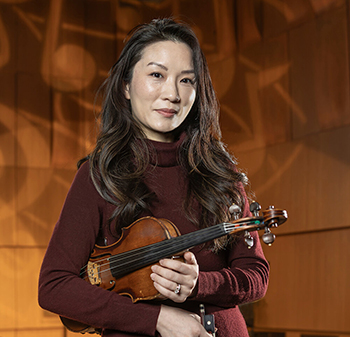
To help music students transition more smoothly from high school to college, Jean Lee emphasizes the importance of strong partnerships between secondary music teachers and university faculty. In her role, she provides that connection for string students attending MSU.
At the same time, developing musicianship and artistic depth is essential for music education majors. For these students, Lee teaches the undergraduate string methods class, where she works to expand their knowledge of string instruments and help them build the musicianship skills needed to lead and participate effectively in ensembles.
While making that point, Lee also emphasized a clear and urgent need for the future of music education.
“The need for passionate, well-prepared teachers has never been greater,” she stressed. “We need thoughtful, dedicated educators in our schools. And part of our responsibility is not just to train musicians, but to mentor future leaders who will advocate for music in their communities.”
In my Deep Dive series, I ask people for one word that captures the essence of both the guest and the topic. For Lee, the word for music education is “transformative.”
“Music education doesn’t just teach students how to play an instrument,” she explained. “It teaches discipline, collaboration, creativity, and empathy.”
She has witnessed this transformation firsthand.
“I’ve watched students discover confidence they didn’t know they had simply by learning to play in an ensemble. That kind of transformation stays with them long after they leave the classroom,” she said.
The way music education becomes transformative depends on a shared direction between students and educators, and it also grows out of life experiences we may not even realize are shaping us. When we look back on our musical journeys, we often find moments where a teacher’s fingerprint remains in our teaching as well—whether in their methods or their wisdom. These experiences shape who we become, planting the seeds we later pass on to our own students.
“Over time, you start to realize that teaching is a kind of continuum,” Lee said. “The things that were given to you become the things you pass forward.”
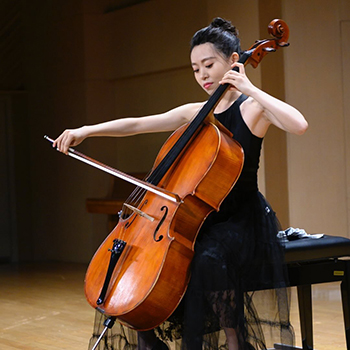
Cellist Yu-Chen Lin is an award-winning musician who studies with Suren Bagratuni, teaches, and writes occasionally for the College of Music.
The role of a teacher can feel a bit like living inside a time capsule. You see students come and go at the same stage of life, with the same innocent, fresh faces. Their youthful energy surrounds you again and again, to the point where it can almost feel like time itself has paused, or as if age is looping in place—moving in circles within the same familiar frame. Meanwhile, the world outside continues to move forward. Society evolves, technology advances, and information continues to expand. As a result, the ways students respond—and the challenges they face—are constantly changing.
From the teacher’s perspective, these shifts can bring a sense of anxiety and uncertainty. In response, Lee emphasizes the importance of being flexible and adaptable. At the same time, she highlights that despite all of the changes in society, the core value of truly understanding students remains unchanged.
“Students want to feel seen and supported,” she said. “When students know you believe in them, they will rise to the challenge.”
An educator may be defined simply as someone who passes on knowledge to support a student’s academic growth. Yet when we reflect on the teachers who shaped us most, it is rarely their knowledge we remember. Instead, it is their personality, their wisdom, and the thoughtful moments that offered warmth and strength during our deepest struggles, greatest successes, or even in quiet, ordinary moments.
In my conversation with Jean Lee, her passion for teaching and the true value it has in a person’s life is obvious. Perhaps this is the very element that makes music education transformative. Perhaps this is when teaching becomes a pair of beautiful wings, quietly, gently caring for every delicate human heart.
More from contributor Yu-Chen Lin:
A Love Letter to Spartans: The beauty of vulnerability and belonging