

About Us
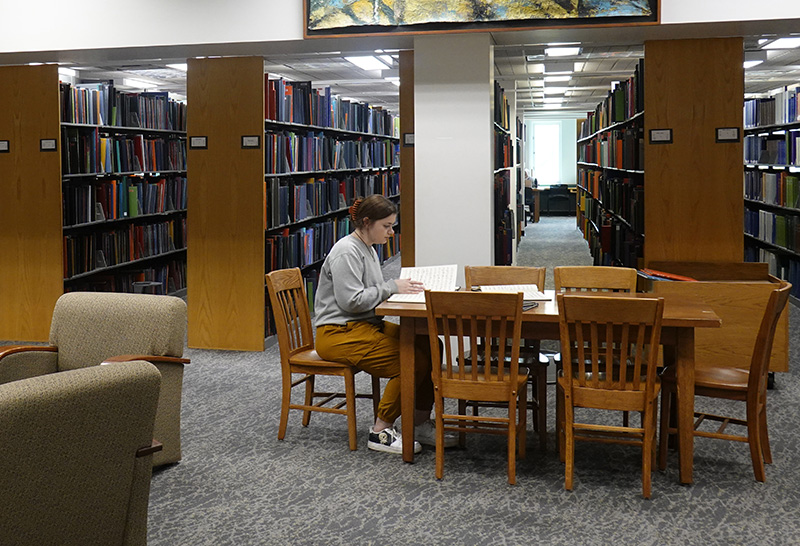
Musicology and ethnomusicology at MSU is supported by an outstanding Music Library, an excellent collection of early musical instruments, and the resources of a major research university.
 The Musicology/Ethnomusicology Area at Michigan State University is committed to the study of music as a diverse social practice. We have a large and active faculty of seven full-time musicologists and ethnomusicologists who specialize in a range of research fields and methodological approaches. The area has strengths in medieval and renaissance music in France and the Low Countries; music and court societies in Western Europe during the early modern period; French baroque music; music in the Caribbean; jazz and popular music; Eastern European music; music of sub-Saharan Africa; North American Indigenous music and dance; intellectual and cultural property; and gender/sexuality in music.
Through coursework and seminars, the Musicology/Ethnomusicology Area contributes to all undergraduate and graduate degree programs in the College of Music. We offer Master’s degrees in historical musicology and ethnomusicology and have an exceptionally strong record of preparing students for doctoral work and arts careers. Students in the Master’s program benefit from a range of area activities, including colloquia, guest speakers, and close work with faculty and fellow students through advising and seminars and methods courses.
Musicology/Ethnomusicology Courses
MUS 214: Introduction to Music Studies
MUS 409: American Music
MUS 410: Jazz History
MUS 419: Baroque Music
MUS 420: Art Music of 18th Century
MUS 421: Art Music of the 19th Century
MUS 422: Art Music of the 20th Century
MUS 424: Music, Sexuality, and Gender
MUS 425: Music South Asia
MUS 426: Music of Africa
MUS 427: Early Music
MUS 428: Special Topics in Musicology (topic varies)*
MUS 429: Music of East Asia
MUS 430: Music of the Caribbean
MUS 431: Indigenous Music in North America
MUS 436: Popular Music of Black America
MUS 810: Graduate Jazz History (topic varies)**
MUS 830: Research Methods
MUS 833: Fieldwork in Ethnomusicology
MUS 992: Seminar in Musicology (topic varies)***
*Recent MUS 428 topics have included:
Music and the Moving Image, Sacred Music in History and Cultures, Music and Games, American Popular Music, History of Orchestral Music
**Recent MUS 810 topics have included:
Jazz Avant-Garde; The Big Band: Historical and Stylistic Development; Jazz in the 1980s; Chicago Jazz; Jazz in the Twenty-First Century
***Recent MUS 992 topics have included:
Teaching Caribbean Music; Music and Identity; Music, Hope, Resilience, and Freedom; Music, Patronage, and Performance; Early Music Performance Practice; Intellectual and Cultural Property; Music, Nationality, and the Other
Music, Tradition, and Modernity; Marching Band: Tradition and Community Identity; Musicals and the Construction of Worlds; Music and Creativity; Romanticism and Its Legacy; Ives, Gershwin, and Copland; Classical Music and Its Audiences in the Twentieth Century
HOLLANDER DISTINGUISHED LECTURES IN MUSICOLOGY SERIES
Each year, the Musicology Area hosts the Hollander Distinguished Lectures in Musicology Series, in which prominent guest scholars share their newest research. The series is generously funded by the late Stanley and Selma Hollander.
- 2026: Mary Channen Caldwell (University of Pennsylvania): “Hearing Song and Conversion in Medieval France”
- 2026: Brian F. Wright (University of North Texas): “Ain’t That a Groove: James Brown’s Bass Players and the Birth of Funk”
- 2025: Jonathan A. Gómez (University of Michigan): “Marquis Hill’s Modern Flows: Musical Metapragmatics and Blackness”
-
2025: Nathan Platte (University of Iowa): “Making Mary Poppins Musical: Adapting Travers’s Novels into Disney’s Film and Ellington’s Album”
-
2024: Lauren Eldridge Stewart (Washington University): “Theme and Variations: the Uses of Classical Music in Haiti”
-
2024: Jake Johnson (University of Oklahoma): “Good Grief: The Sadness of Rodgers and Hammerstein’s State Fair”
-
2024: Jeffrey Magee (University of Illinois Urbana-Champaign): “Listening in Black and White: Louis Armstrong’s ‘Musical Universe’ a Century Ago”
-
2024: Dwight F. Reynolds (University of California, Santa Barbara): “Muslims, Jews, and Christians in the Musical World of Medieval Iberia”
- 2023: Francesca Royster (DePaul University): The Futures of Black Country Music
- 2023: Anna Schultz (University of Chicago): Marathi Kirtan Before and After the “Classical”
- 2023: Halina Goldberg (Indiana University), “The Piano Virtuosa at Home and Away: Transnational Salon Networks of Maria Szymanowska, Maria Kalergis-Muchanoff, and Marcelina Czartoryska”
- 2023 Mark Clague (University of Michigan), “Writing Hits for the Symphony: The Fusion of Classical and Popular in George Gershwin’s An American in Paris“
- 2022: Marina Frolova-Walker (University of Cambridge), “Revolution, Trauma, and a Transition to Nowhere: Thoughts on Russian Music and Culture post-1991”
- 2021: Steven Swayne (Dartmouth College), “The Twenties: Sondheim’s, Mine, Yours, and Ours”
- 2020: Naomi André (University of Michigan), “Activist Operatic Spaces in Puccini’s La Bohème with South Africa’s Breathe Umphefumlo and Larson’s Rent”
- 2019: Emily Dolan (Harvard University), “Impossible Gluck, or the Future of Timbre”
- 2018: Ingrid Monson (Harvard University), “Courage and Improvisation: the Max Roach Papers”
- 2017: Anne Robertson (University of Chicago), “Beads, Books, Coins and Rituals: Josquin’s Music and Material Culture of the Late Middle Ages”
- 2016: Annegret Fauser (University of North Carolina), “Appalachian Spring: Martha Graham, Aaron Copland, and Their Audiences”
- 2015: Jocelyn Neal (University of North Carolina), “The Politics of Twang or What’s a Harpsichord Doing in My Country Music?”
- 2014: Glenn Watkins (University of Michigan), “Writing History: The Composer and the Musicologist”
- 2013: John Rice (University of Michigan), “Music and the Grand Tour in the 18th Century”
- 2012: Charles Hiroshi Garrett (University of Michigan), “Joking Matters: Humor and American Music”
- 2011: Danielle Fosler-Lussier (The Ohio State University), “The Right and the Best Ambassador: Marian Anderson, Louis Armstrong, and the U.S. Reception of Cultural Diplomacy”